Tag: High Court of Australia
-

In McDermott v The King (1948) 76 CLR 501, the High Court reaffirmed that voluntariness is the fundamental requirement for the admissibility of confessional evidence. The Court also confirmed that trial judges may exclude a confession where the circumstances in which it was obtained are unfair or improper. Additionally, the Court held that the English…
-

In Pickering v The Queen [2017] HCA 17, the primary issue on appeal to the High Court was whether the trial judge erred by failing to leave s 31(1) defence to the jury, thereby resulting in a miscarriage of justice.
-

In Queensland v Masson [2020] HCA 28, the High Court considered whether the State was liable in negligence for its paramedic’s omission to promptly administer Adrenaline to Masson, who sustained severe brain damage after an asthma attack.
-
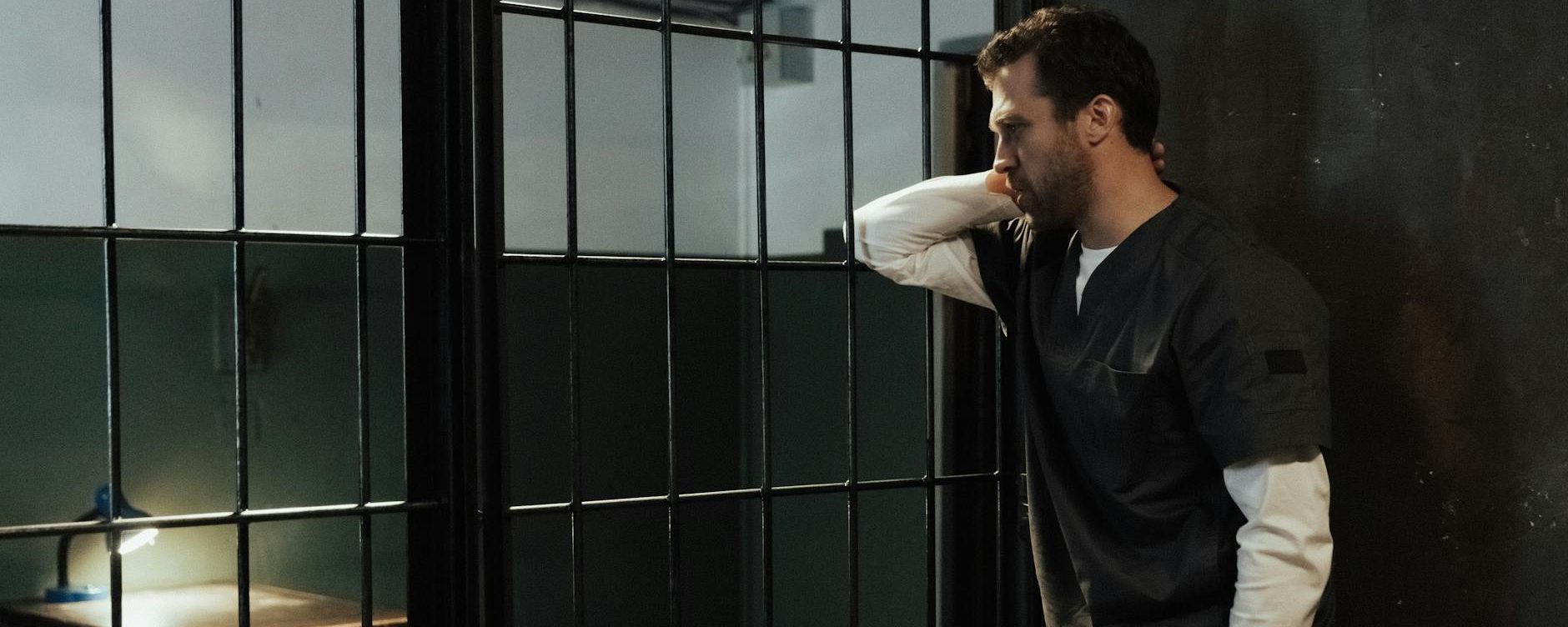
In this special case Cherry v Queensland [2025] HCA 141, the High Court was questioned on the constitutional validity of Queensland’s ‘no body-no parole’ law. The plaintiff relied on the Kable principle, arguing that ss 175L and 175E of the Corrective Services Act 2006 (Qld) invalid. The High Court determined s 175L of the Corrective…
-

In R v Falconer (1990) 171 CLR 30, the High Court considered whether evidence for a sane automatism defence was improperly excluded at trial, and whether a ‘dissociative state’ caused by severe emotional stress (from domestic violence) could constitute non-insane automatism under the Criminal Code (WA), rendering the act involuntary and negating criminal responsibility if…
-

In Stuart v The Queen (1974) 134 CLR 426, the High Court considered constructive murder (also known as felony murder), clarifying that conviction requires proof of an unlawful act endangering life, not intent to kill, leading to the refusal of Stuart’s application.
-

In CCIG Investments Pty Ltd v Schokman [2023] HCA 21, the High Court unanimously held that the employer was not vicariously liable for its employee’s drunken behaviour as it was not within the ‘course or scope of employment’.
-

In Pearce v The Queen (1998) CLR 610, the defendant was indicted on two charges from a single incident. The High Court held there was no double prosecution, as each offence required proof of a different essential element, but the trial judge erred in sentencing.
-

In Kaporonovski v The Queen (1973) 133 CLR 209, the High Court upheld the Queensland Criminal Court of Appeal’s decision that the provocation defence under s 269 did not apply to s 320 (grievous bodily harm) of the Criminal Code (Qld).
-

In this negligence case Wallace v Kam (2013) 250 CLR 375, the High Court unanimously dismissed the appeal holding that Dr Kam was not liable for Wallace’s neurapraxia, as Wallace would have proceeded with surgery regardless of being warned about the specific risk.
-

In Louth v Diprose (1992) 175 CLR 621, the High Court upheld the trial judge’s decision that Louth’s actions constituted unconscionable conduct. Louth manipulated Diprose’s ’emotional dependency’ on her, to acquire property benefiting herself.
-

In Royall v The Queen (1991) 172 CLR 378, the High Court upheld Royall’s murder conviction. Royall’s actions were the substantial or significant cause of the victim’s response of jumping to her death, maintaining the chain of causation.
-

In Amaca Pty Ltd v Ellis [2010] HCA 5, the High Court determined that asbestos exposure was not a probable cause of a long-term smoker’s lung cancer—it was incorrect of the trial judge to assess causation by reference to the cumulative asbestos exposure over successive employment periods.