
Tort of Private Nuisance:
The tort of private nuisance is defined in Hargrave v Goldman (1963) 110 CLR 40,1 per Windeyer J at 60, as ‘an unlawful interference with a person’s use or enjoyment of land, or of some right over, or in connexion with it’.2
Private nuisance is the interference with the private rights to his or her land, distinct from public nuisance; the interference with those interests that are shared by the public, that is public rights.3 A private nuisance gives rise to a civil cause of action only, in contrast to an action in public nuisance, that is civil and criminal in Queensland.4
Common private nuisances include:5
- flooding,6
- the spread of fire,7
- smoke,8
- the encroachment of tree roots and branches,9
- the spread of dust,10
- withdrawal of lateral support of land,11
- smells,12
- noise,13
- bright lights,14
- deliberate surveillance.15
I. PRIVATE NUISANCE TYPES
There are two distinct types of private nuisance: (1) interference that causes material physical damage; and (2) interference with the enjoyment of land.16 The House of Lords in St Helen’s Smelting Company v Tipping (1865) 11 ER 1483 distinguished between two categories: interferences which cause material injury to property; and interferences that cause “sensible personal discomfort”.17
1. Material Physical Damage
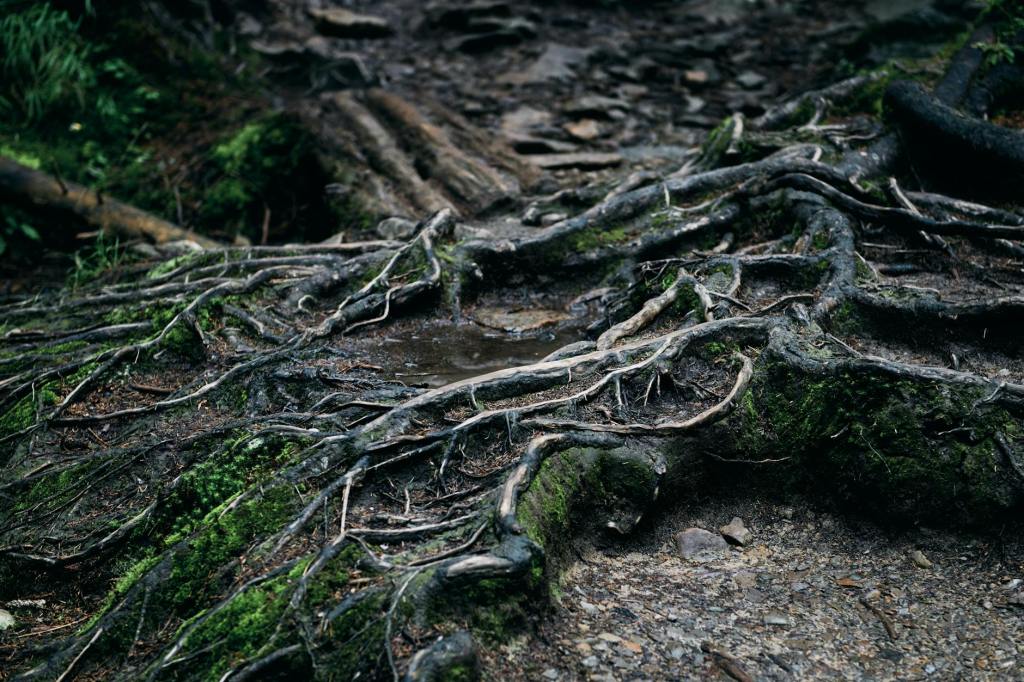
Material physical damage in private nuisance refers to tangible harm caused by encroaching elements such as flooding, spreading fire, tree roots, and vibrations.
For instance, in Corbett v Pallas (1995) Aust Torts Reports 81-329, water overflowing from the neighbour’s pool caused material damage to the plaintiff’s property. Similarly, in Sedleigh-Denfield v O’Callaghan [1940] 3 All ER 349, flooding from a blocked pipe that was left unabated for three years. In Davey v Harrow Corporation [1958] 1 QB 60, damage was attributed to encroaching tree roots from the adjoining land (see also Marshall v Berndt [2011] VCC 384).
While private nuisance does not require the plaintiff to suffer actual physical damage, physical damage to the plaintiff’s property of a sufficient degree can constitute a nuisance: Halsey v Esso Petroleum Co Ltd [1960] 1 WLR 683.18
In Halsey v Esso Petroleum Co Ltd [1960] 1 WLR 683, the plaintiff, who lived opposite the oil depot, claimed that acid smuts emitted from the boilers had stained washing hung up to dry and damaged the paintwork on his car.19 The Court stated at 691: ‘liability for nuisance by harmful deposits could be established by proving damage by the deposits to the property in question, provided of course that the injury was not merely trivial’.20
In St Helen’s Smelting Co v Tipping (1865) 11 HL Cas 642,21 the House of Lords held a copper smelting factory liable for nuisance caused by the noxious fumes that damaged the plaintiff’s crops and vegetation.22 Here, the ‘character of the neighborhood’ (or the ‘locality principle’) was established (e.g. industrial or residential), distinguishing between two types of nuisances: material damage and sensible personal discomfort; dismissing the locality’s industrial nature as a defence.23

2. Interference with the Enjoyment of Land
The second type of private nuisance is an ‘interference with the enjoyment of land, or a disturbance of the comfort, health and convenience caused‘, despite no physical damage, such as smell, fumes, dirt, dust, smoke, and noise: St Helen’s Smelting Co v Tipping (1865) 11 HLC 642; Miller v Jackson [1977] 3 WLR 20.
In Miller v Jackson [1977] 3 WLR 20 (CA), a cricket club was held liable for nuisance and negligence after Mrs Miller, who lived near the field, claimed that cricket balls landing on her property disrupted her garden enjoyment and caused damage.24 Despite the club’s 70-year history and attempts to raise the fence, the defence of ‘coming to the nuisance’ was rejected by the Court of Appeal, following Sturges v Bridgman (1879) 11 Ch D 852.25 In dissent, Lord Denning MR held that ‘the public interest should prevail over the private interest’ (see also Lester-Travers v City of Frankston [1970] VR 2: on council land, golf balls damaged the house and endangered the occupants of the adjacent property).26
Non-physical interference can be actionable even if it does not impinge on the senses (such as smell, sound), but what the court considers an interference with the ‘enjoyment and use of the land’ (Thompson-Schwab v Costaki [1956] 1 WLR 335).
In Thompson-Schwab v Costaki [1956] 1 WLR 335,27 the frequent visits by prostitutes and clients to a brothel constituted an actionable nuisance by itself due to the ‘morally offensive’ nature of the activity per Lord Evershed, establishing that nuisance extends beyond just a physical inconvenience.28
II. ELEMENTS OF PRIVATE NUISANCE
Generally, in Australia, to establish a cause of action in private nuisance, the plaintiff must prove on the balance of probabilities that:29
- the plaintiff has title to sue;
- there is an interference with the recognised right attached to land; and
- damage; the interference was both substantial and unreasonable.30
1. TITLE TO SUE
Does the plaintiff have the right or title to sue in private nuisance?
Lord Goff of Chieveley stated at 688 that ‘[o]nly those with a right to exclusive possession of land can sue in private nuisance. This may be an owner in possession, a tenant, or a licensee with exclusive possession’ (Hunter v Canary Wharf Ltd [1997] AC 655).31
For example, freehold owners, tenants for a term in actual possession (e.g. monthly tenants),32 licensees with exclusive possession,33 and persons taking the benefit of an easement or profit à prendre,34 have title to sue in nuisance.35
In the context of riparian rights and fisheries, in Nicholls v Ely Beet Sugar Factory Ltd [1936] Ch 343, Lord Wright MR held at 349 that private nuisance consisted of the disturbance of an easement.36 The effluent pollution from the factory amounted to an action in nuisance, and the factory was held liable for the damage to the fisheries.
Freehold owner or licensed tenants:
If the plaintiff is the legal owner and occupier of his/her residence they have the right to sue in private nuisance (Oldham v Lawson (No 1) [1976] VR 654; Malone v Laskey [1907] 2 KB 141).37
In Oldham v Lawson (No 1),38 the plaintiffs, husband and wife, sought damages for noise from an adjoining house. Harris J asserted at 657, that the mere occupation of land is not enough, even if the occupier is a relative of the owner/tenant. As the wife was the sole owner of the house, the husband was not allowed recovery.39 Harris J observed at 657 that:
… [I]n cases such as the present, where husband and wife reside in the same house, and it is the wife who is the owner, the husband is, legally speaking, only a licensee and cannot sue in nuisance, in the absence of some particular circumstances which alter his status. Circumstances such as the payment of money due by the owner on the house, and the payment of rates, as was suggested was the case here, would, in my opinion, be insufficient to alter that status.40
Australian courts are likely to follow the legal reasoning in the authority case of Hunter v Canary Wharf Ltd [1997] AC 655, where the House of Lords held that ‘only claimants with legal property rights can launch actions in private nuisance’ and at 692 ‘to have standing to sue in nuisance the plaintiff must be the freeholder or licensed tenant’.41 Many claimants in Hunter v Canary Wharf Ltd had no proprietary interest, such as lodgers, spouses, and relations such as the child of the landowner.
Licensee or guests:
It is not enough to be a mere licensee.42
The decision in Hunter v Canary Wharf [1997] AC 655 overturned Khorasandijan v Bush (1993) QB 727,43 which had recognised a licensee can bring a claim in private nuisance. Here, the Court expanded the scope of proprietary interest involving a daughter who lived in her parents’ house and received harassing phone calls.6
In Malone v Laskey [1907] 2 KB 141, the licensee had no title to sue as the claimant, Mrs Malone, had no proprietary interest in the house, nor did her husband who resided on the property as a ‘mere licensee’. Mrs Malone was present on the property by the licence of her husband’s employer who owned the property and had ‘no right of occupation in the proper sense of the term’ (at 151).44
Occupation:
There is some proposition in recent Australian cases regarding occupation: Lanester Pty Ltd v Arapower Pty Ltd; Deasy Investments Pty Ltd v Monrest Pty Ltd [1995] QCA 466, ‘the mere fact of occupation is sufficient to give a plaintiff standing to sue in private nuisance’ (see also Animal Liberation (Vic) Inc v Gasser [1991] 1 VR 51; Stockwell v Victoria [2001] VSC 497).45
In Animal Liberation (Vic) Inc v Gasser [1991] 1 VR 51, an animal rights group demonstrated outside a circus that camped on council land. On appeal, the Victorian Supreme Court upheld the finding of nuisance and granted injunctions restraining the group, even though they were occupiers.46
Landlords out of possession and other persons with reversionary interests may have title to sue in respect of interferences of a permanent character which will or has caused permanent damage to the land.47 For example, a fence blocking access to a road: Carter v Kenyon (1863) 2 SCR (NSW) 222.48
Who is the proper defendant?
In Oldham v Lawson (No. 1) [1976] VR 654, Harris J stated at 655 that:
… [T]he plaintiffs must show matters sufficient to establish a nuisance, they must show that they are persons who are competent to bring an action in nuisance, they must show that the defendants are persons who can properly be made liable in nuisance, and they must show that they have suffered damage as a result of any nuisance committed by the defendants.49
Creator of the nuisance:
In Peden Pty Ltd v Bortolazzo [2006] QCA 350, the plaintiffs, operators of a hotel, were situated next to an adjacent housing flat owned by the defendant, who leased the property to tenants. The plaintiffs sought damages due to the tenants’ excessive noise from loud music, dog barking, repeated loud drunken behaviour, and smoke from burn-offs.50 The Court of Appeal held at [29] that:
A lessor is not responsible for a nuisance created by a tenant unless the lessor let the premises for a purpose calculated to cause a nuisance, that is, by express authorisation of the nuisance or which in circumstances where the nuisance was certain to result for the purposes for which the property was being let.51
In Sedleigh-Denfield v O’Callaghan [1940] AC 880, the House of Lords held the defendant liable for nuisance, even though the defendant was not the creator of the nuisance. The Court affirmed that an occupier is liable if they continue to adopt the nuisance created by a third party. In this case, the defendant had knowledge and failed to remove the nuisance, essentially allowed the nuisance to ‘continue’ thereby ‘adopted’ it.52

Who may be found liable?
Creator, owner, occupier:
While in the majority of cases the creator of the nuisance is the owner or occupier of the nuisance from which the interference emanates from; the creator can be sued, even if they are not the owner, have property rights over the land, or occupier of the land (Fennell v Robson Excavations Pty Ltd [1977] 2 NSWLR 486).
In Fennell v Robson Excavations Pty Ltd [1977] 2 NSWLR 486, an excavator was held liable even though they had never been in occupation or possession of the property where excavation was performed. The excavator was employed by a developer to remove dirt from the neighbouring property.53 The defendants argued that they were not liable in nuisance as they were not in possession; however, Glass JA’s reasoning at 492–493 was that:
Although there appears to be no direct authority fastening liability on a complete stranger to the occupier of land upon which the nuisance is created, the weight of authority, it seems to me, attaches liability to any person who creates a nuisance while present on land with the authority of its occupier.54
In Benning v Wong (1969) 122 CLR 249, Windeyer J stated at 298–299 that ‘[t]he liability of the creator of a nuisance is strict and requires no proof of intention or negligence’.55
Continuer or adopter of the nuisance:
Liability for ‘continuing’ or ‘adopting’ a nuisance depends on fault on the part of the defendant, in the sense of a failure to take reasonable care — however, it may be argued that a defendant who did not create the nuisance, and who neither knew nor ought to have known of it, is not liable for that nuisance: Montana Hotels Pty Ltd v Fasson Pty Ltd (1986) 69 ALR 258.
In Montana Hotels Pty Ltd v Fasson Pty Ltd (1986) 69 ALR 258, the Privy Council dismissed Montana Hotels’ appeal. Here, the plaintiff claimed structural damage from water seepage was due to a defective drainage system on the leased Fasson building.56 The Privy Council considered that ‘ought to have known’ could not mean more than ‘would have known … if the precautions which a reasonable landowner would take’ had been taken by the defendant.57
As to what constitutes an ‘adoption’ or ‘continuation’ of a nuisance, Viscount Maghaum’s dicta in Sedleigh-Denfield v O’Callaghan (1940) AC 880 at 894:58
In my opinion an occupier of land ‘continues’ a nuisance if with knowledge or presumed knowledge of its existence he fails to take any reasonable means to bring it to an end though with ample time to do so. He ‘adopts’ it if he makes any use of the erection, building, bank or artificial contrivance which constitutes the nuisance. In these sentences I am not attempting exclusive definitions.59
In Sedleigh-Denfield v O’Callagan [1940] 3 All ER 349 at 350, the appellant’s garden was flooded due to a blocked pipe and grate on the respondent’s property. Despite three years passing before the flooding occurred, the respondents failed to clean the ditch, which their authorised person had neglected.60 The House of Lords held the respondents liable, as they knowingly allowed the nuisance to continue unabated, thereby ‘adopting the nuisance’.61
